- ONLY LED
- CHINA
- 1000sqm /month
- 1000pcs
ES Series stadium perimeter LED display: 1600 900 mm cabinet, 10 mm and 6.25 mm pitch, 6,000 cd/m², 7,680 Hz, 50 kg per panel. A 250 m run loads into one 40 ft container.
Product details
 ES Series · 10 mm and 6.25 mm pitch
Stadium perimeter LED display, 1600 × 900 mm
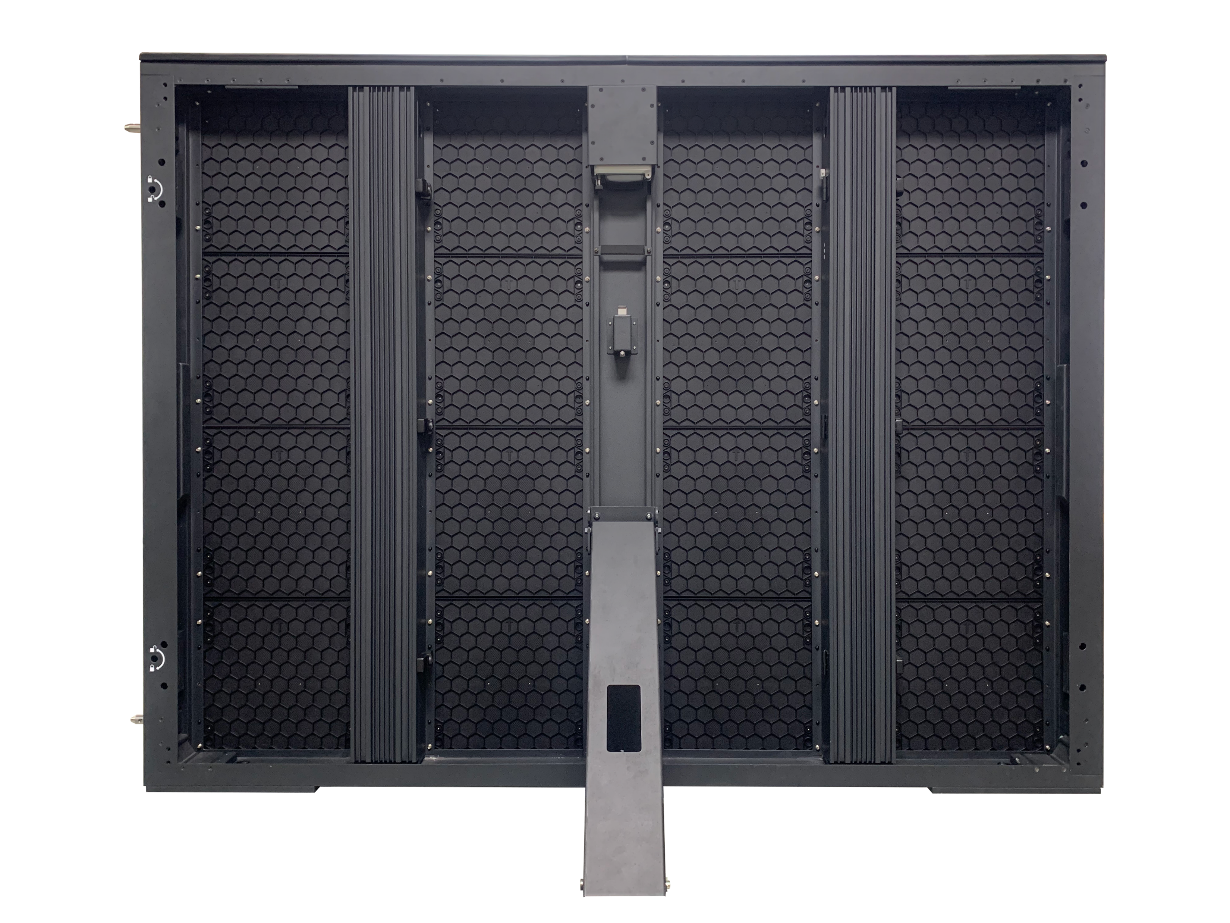
One 1600 × 900 mm cabinet, two pitches: 10 mm for ES10, 6.25 mm for ES6. Both run 6,000 cd/m² at 7,680 Hz and weigh 50 kg per panel. The cabinet stands on a folding 90° bracket; a 250 m perimeter packs into one 40 ft container.
Perimeter LED advertising for football stadiums and multi-sport venues
ES Series cabinets are specified for fixed runs at pitch level, inside the broadcast frame. All variants use the same 1600 × 900 mm panel, so a venue can mix cabinet heights, extend a run or replace a section.
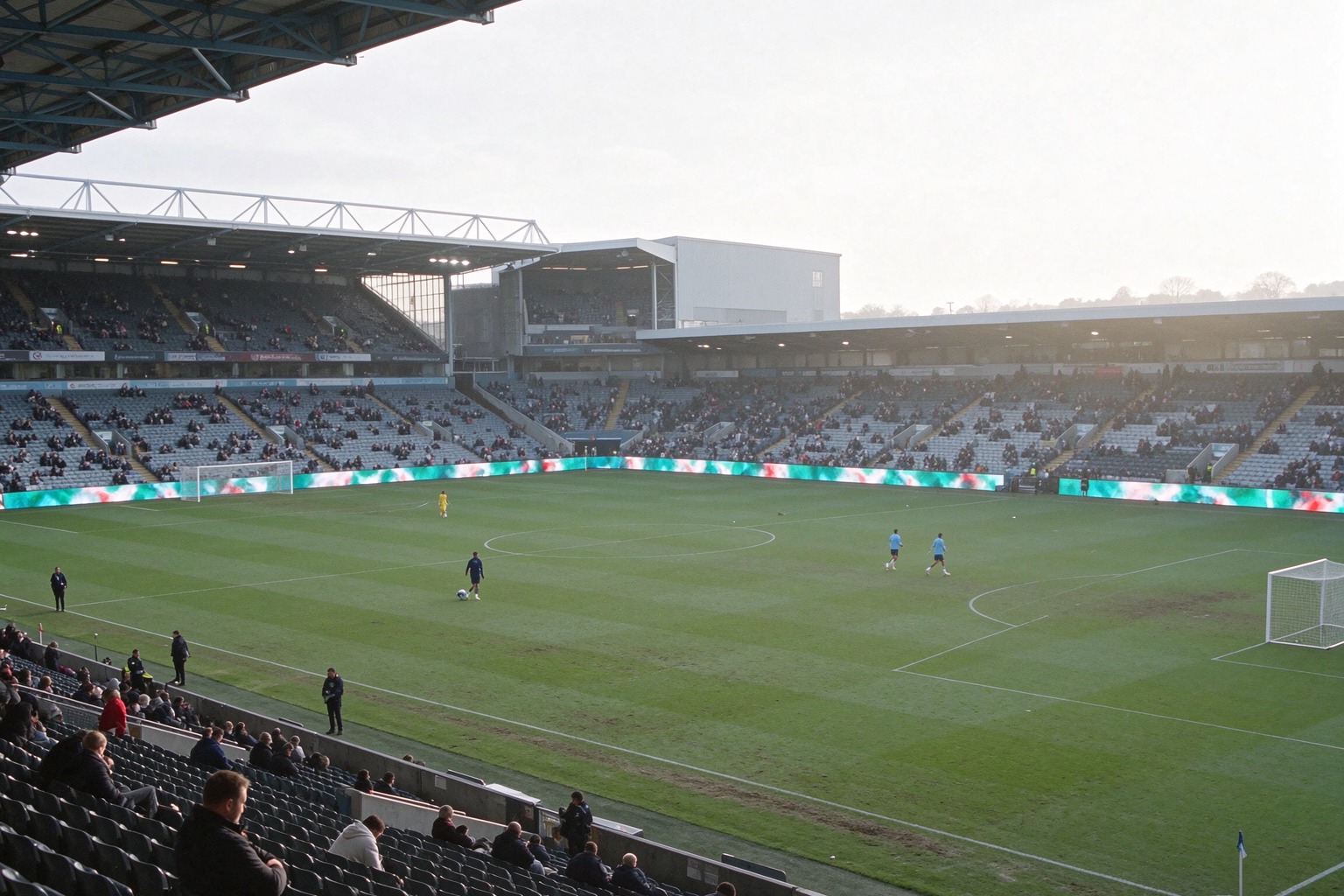
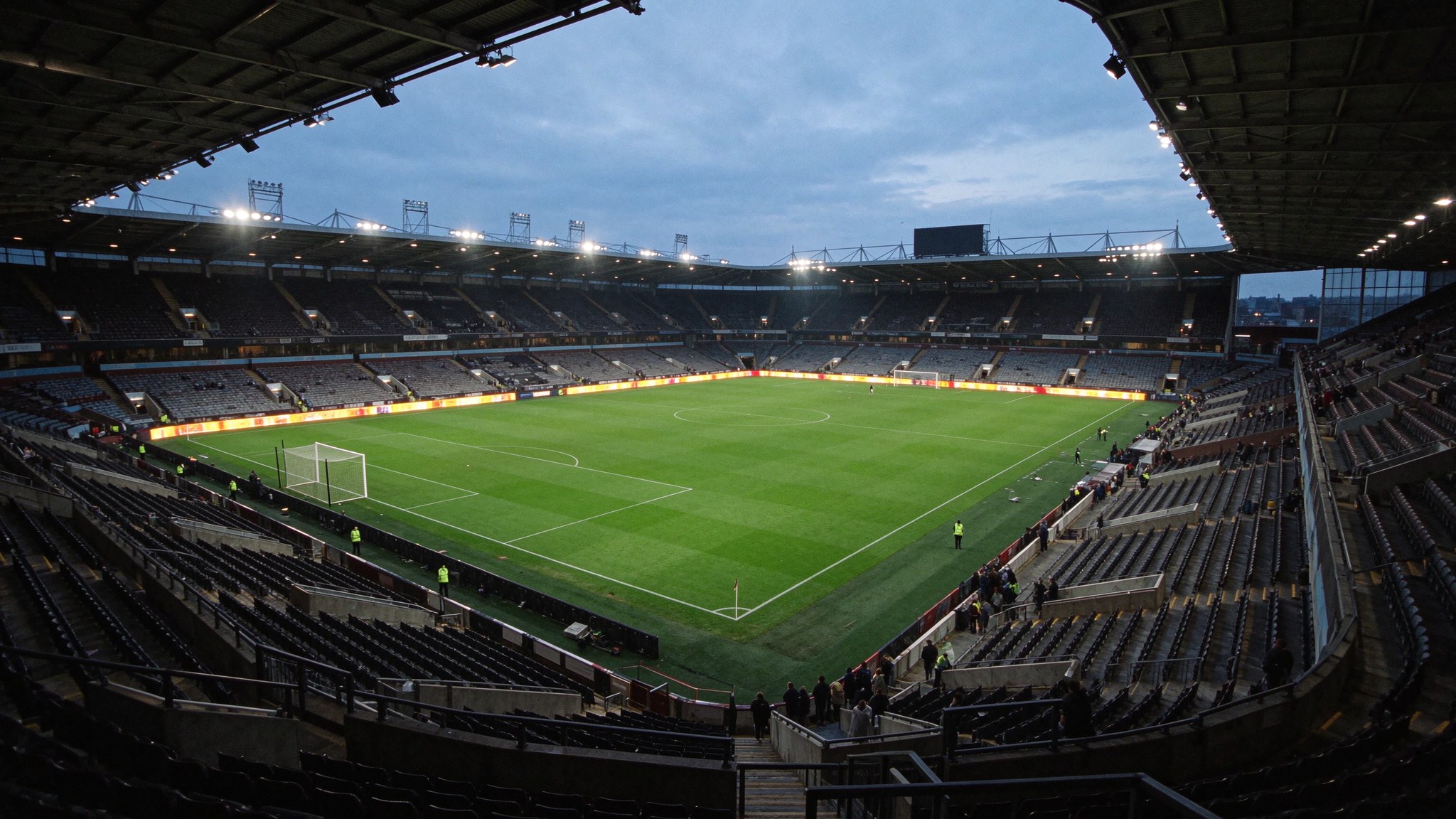
Football stadium perimeter
Pitch-side advertising along the touchline and behind both goals.
Rugby and multi-sport pitches
Ground-level boards on pitches with regular contact at the boundary.
Athletics and indoor arenas
Floor-level runs for track events, courts and indoor halls.
Broadcast-visible boards
Panels inside the camera frame, where refresh and flicker control apply.
Sponsor rotation
Perimeter advertising sold by the match, section or competition.
Tournament and rental fleets
Carts, spares and repeat load-ins for events that move between venues.
Cabinet design for pitch-side impact
Perimeter boards sit where players slide into them and balls leave the pitch. ES cabinets take that impact on moulded edges instead of the LED face, fold flat for transport, and are serviced from the rear without shutting the display down.
Impact falls on the moulded edge
A moulded top protection cap sits above the frame edge and a soft rubber mask covers the face edge. Contact lands on plastic and rubber rather than an aluminium corner, and the modules sit behind that line.
A failed panel comes out without tools
The side lock releases by hand. A panel with a power or data fault leaves the run and a spare goes in, while the sections either side stay locked. M10 hook locks pull neighbouring panels into line along the whole run.
90° bracket, single-installer set-up
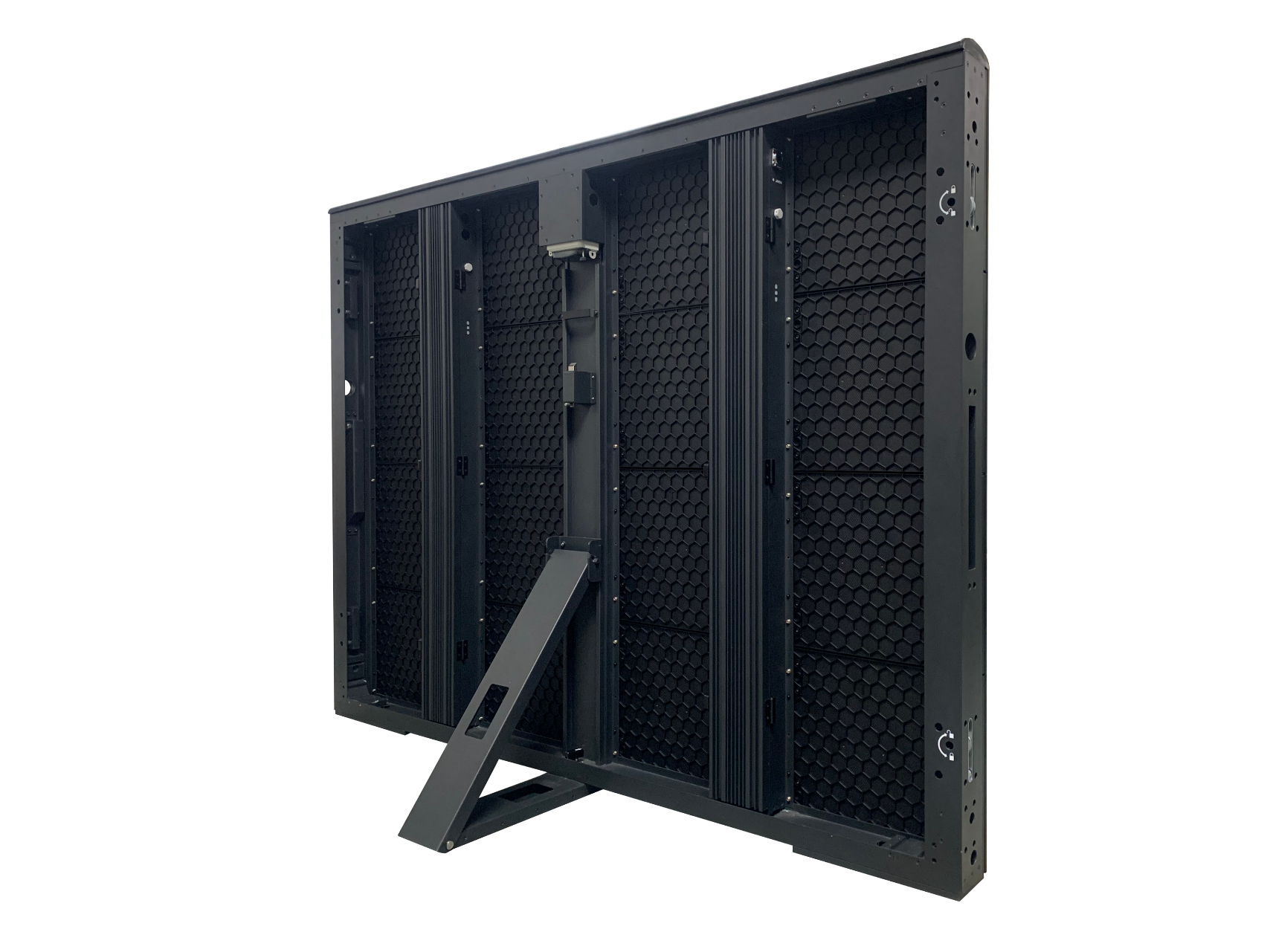
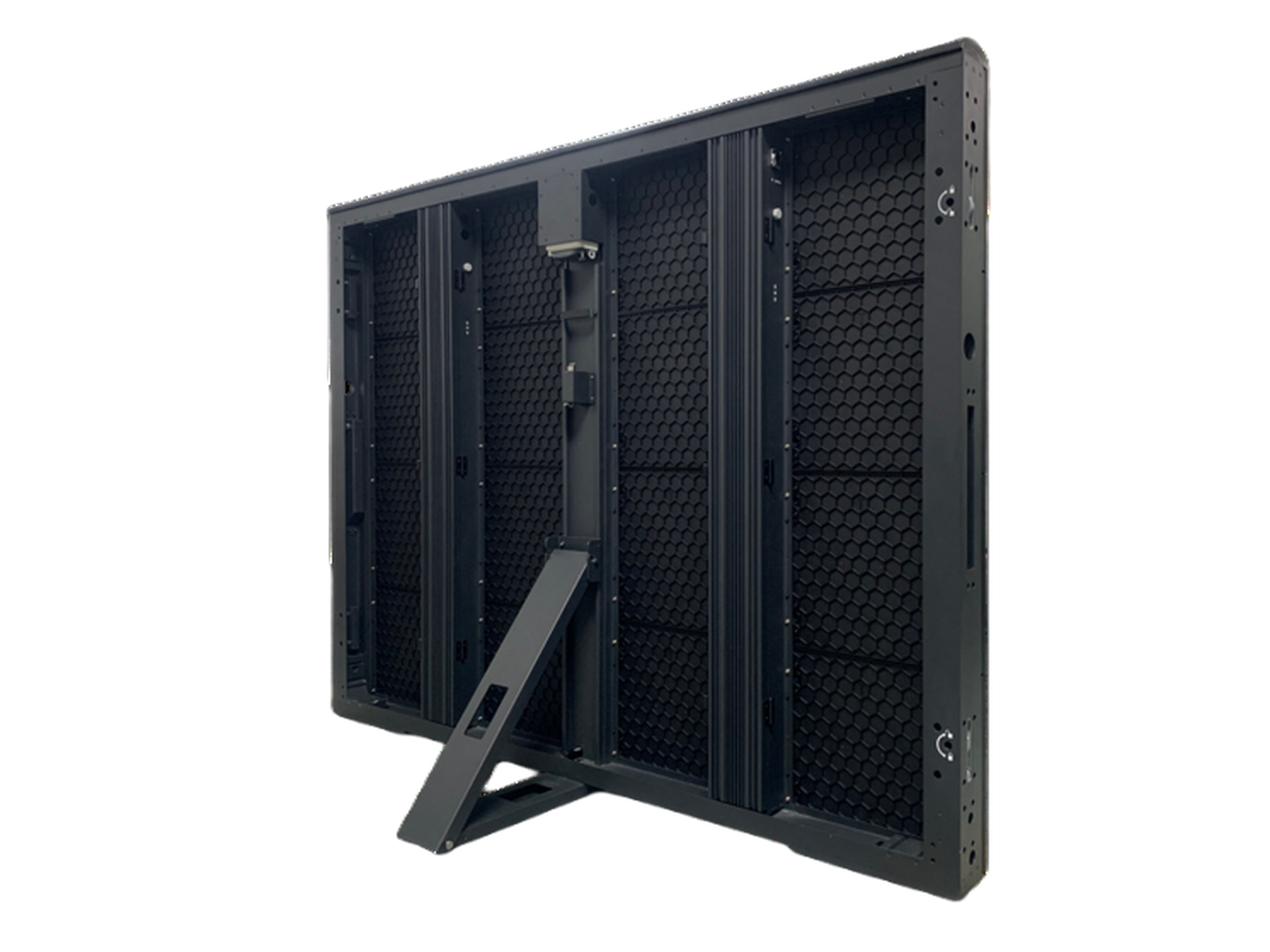
The bracket folds to a fixed 90° stop. Pull the deployment lever, the bracket swings out, and the panel stands on its own feet while it is aligned. A top bar handle and side positioning pin let one installer place the next panel by hand.
Sealed front, vented rear
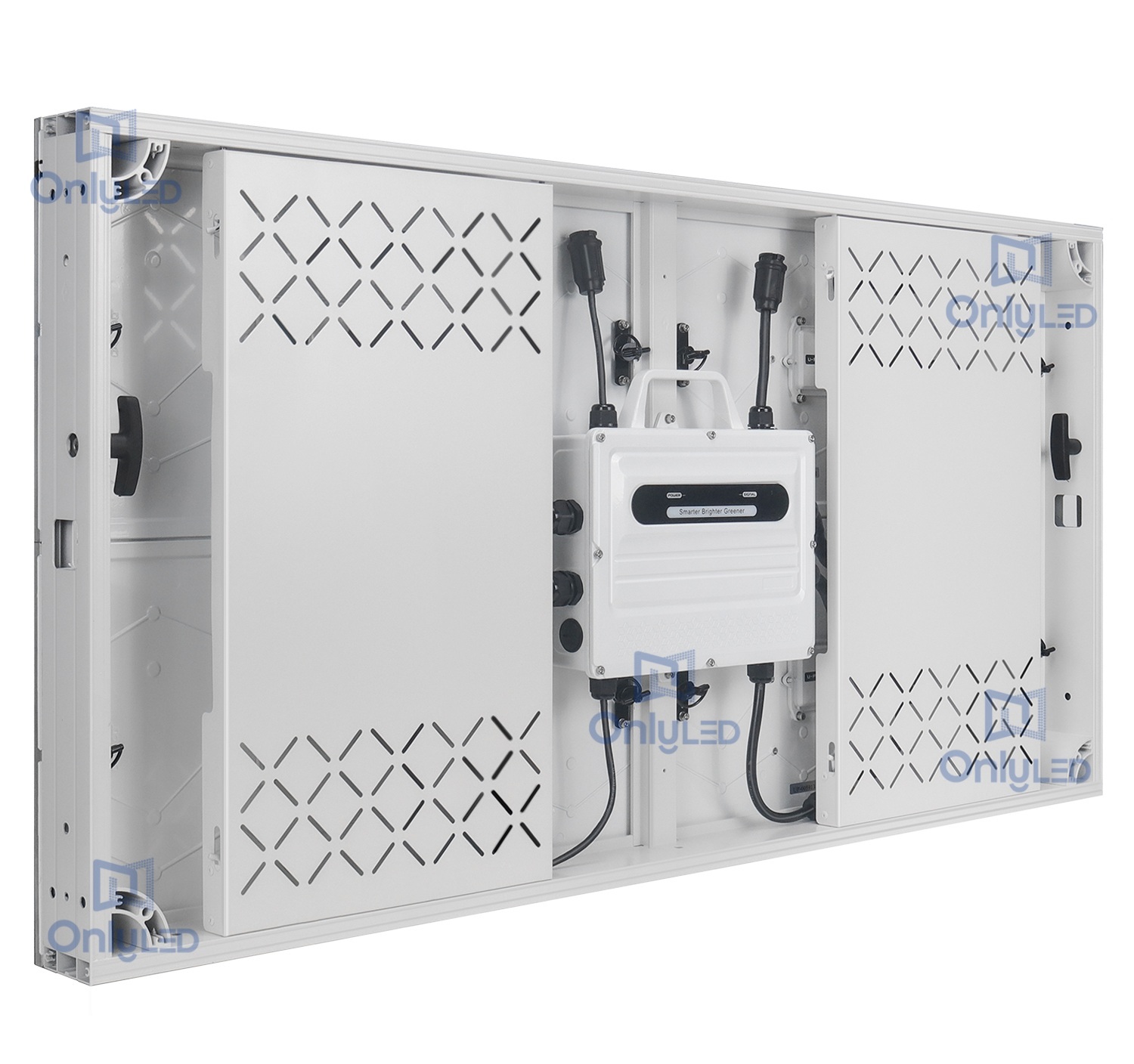
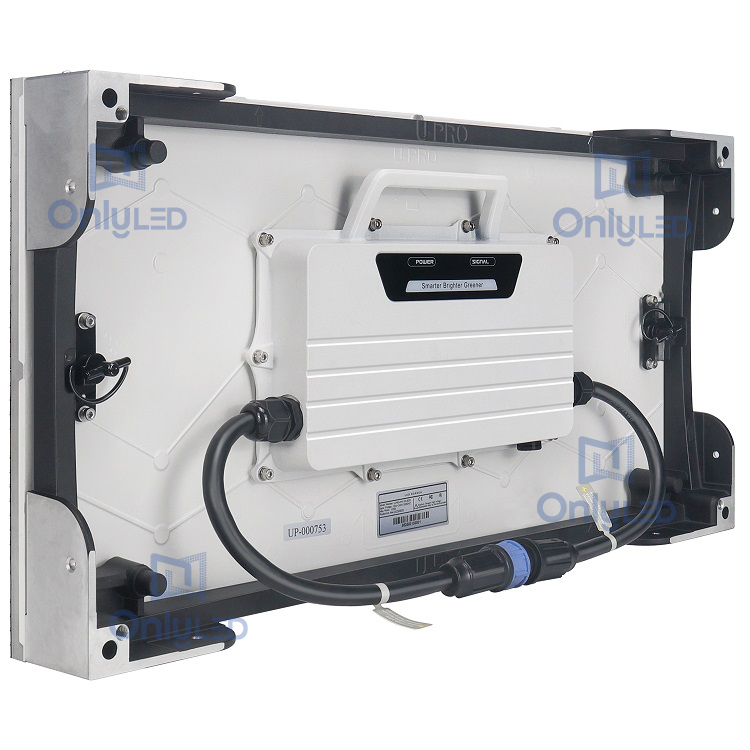
Aluminium profile cabinet, radiator fins along the back and a waterproof air vent on each control unit. Internal pressure and temperature equalise, heat moves to the fins, and the RCD sits under its own cover.
Brightness and refresh for stadium broadcast
Brightness is 6,000 cd/m² on the face and refresh is 7,680 Hz, for both part numbers. A rotating sponsor image stays clean through a camera pan and does not beat against 50 Hz or 60 Hz shutters. Venues running evening fixtures usually dim the board.
At 6,000 cd/m² the face stays readable under floodlight and in low afternoon sun. From touchline distances the pixel structure of either pitch is hard to see at normal viewing angles; ES6 goes where front rows and pitch-side cameras sit closer.
- Brightness, ES10 and ES6
- 6,000 cd/m²
- Refresh rate
- 7,680 Hz
- Pixel density, ES10
- 10,000 dots/m²
- Pixel density, ES6
- 25,600 dots/m²
- Scan grade
- 2 s / 5 s
 1
2
3
4
5
ES Series cabinet, part by part
Five parts determine how the cabinet behaves over a season: the contact edge, module access, the locks between panels, bottom protection and the bracket.
- 1Top protection cap
Moulded cap above the upper frame edge; the first surface a sliding player meets. - 2Field-replaceable module backs
Modules are removed from the rear without dismantling the run. - 3Hook locks, upper
M10 hooks pull neighbouring panels into line; 4 fast locks per side. - 4Lock and protection plate, lower
Bottom plates sit on the pitch surface and carry the lower lock. - 590° folding bracket
Fixed stop in SUS304, folds flat into the cabinet for transport.
ES Series perimeter panel: front, back and edge
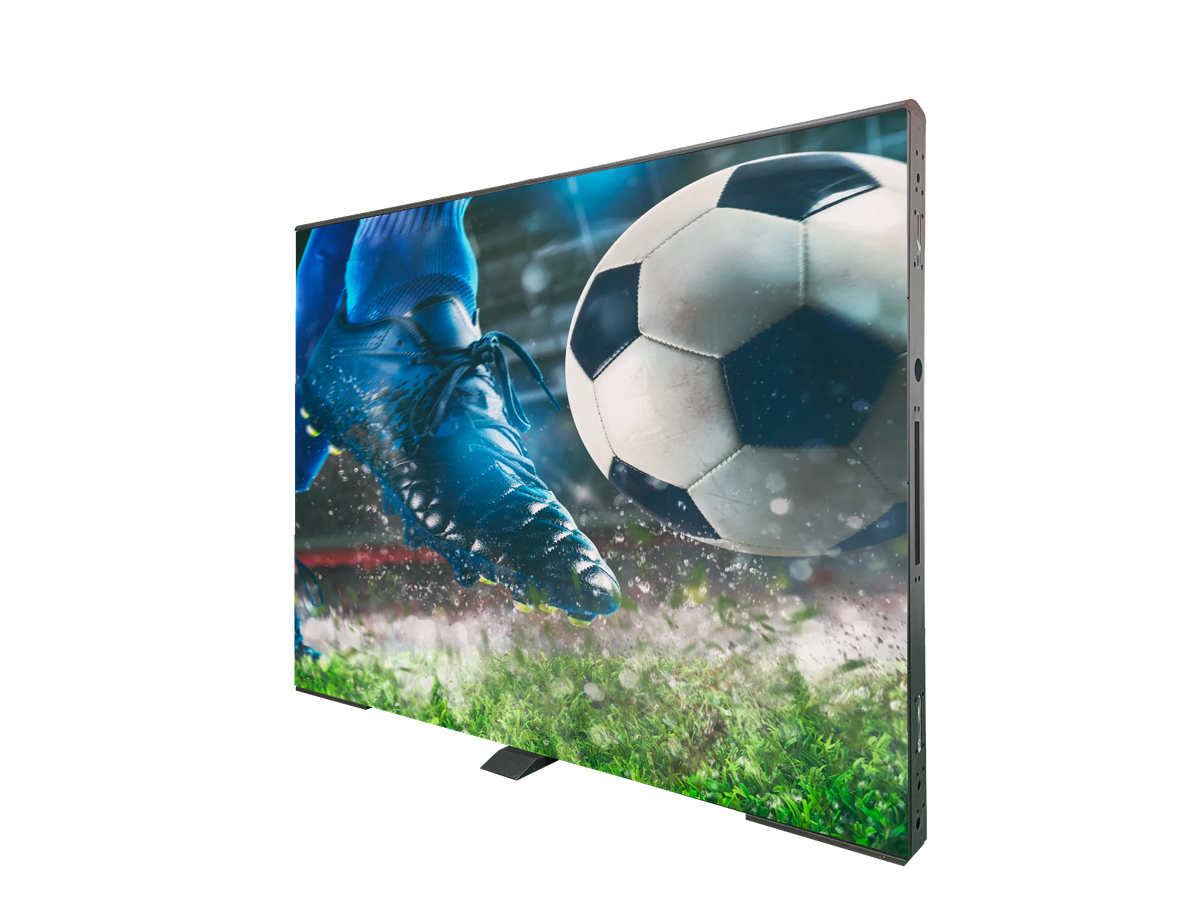
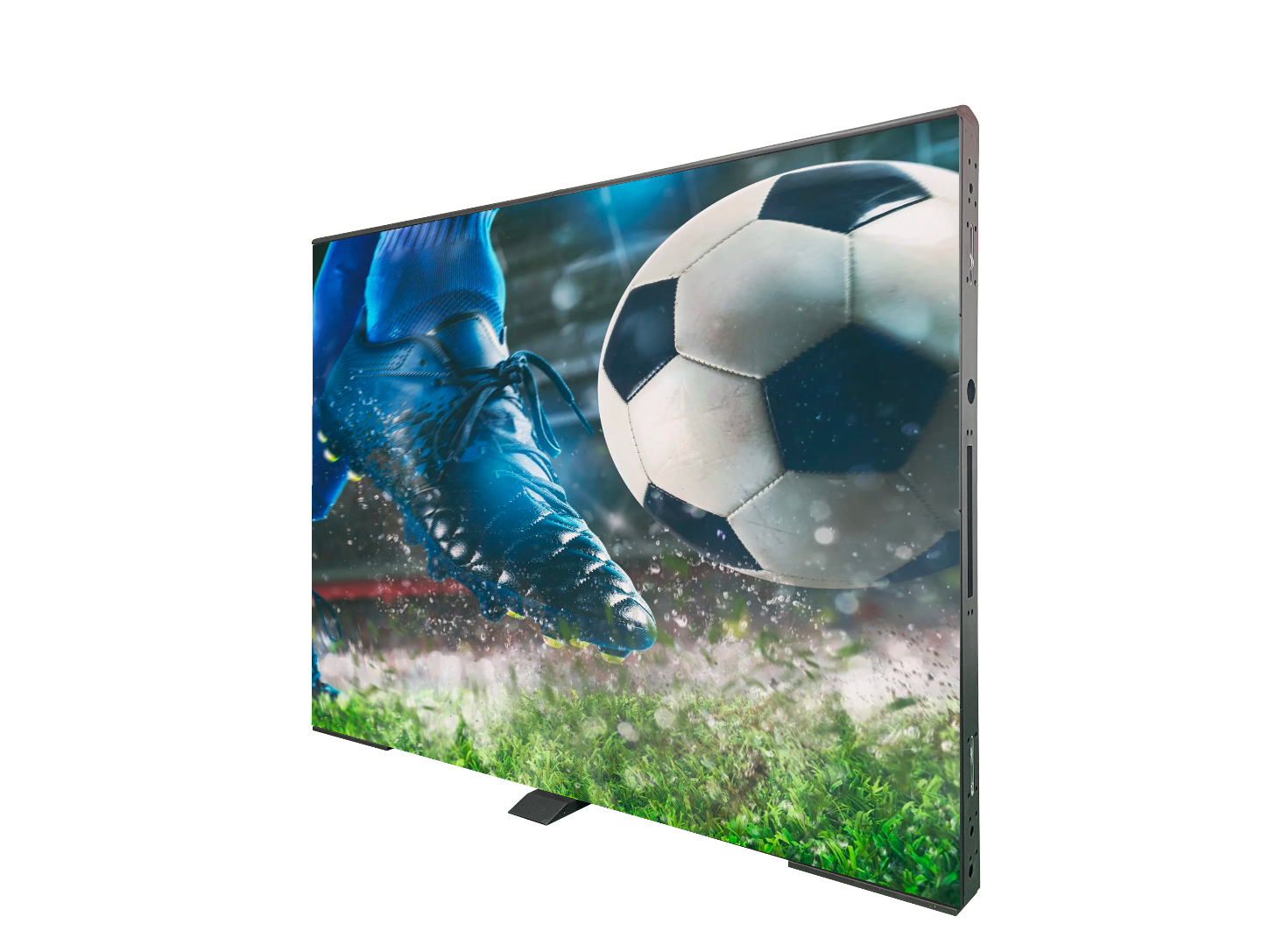
Front face
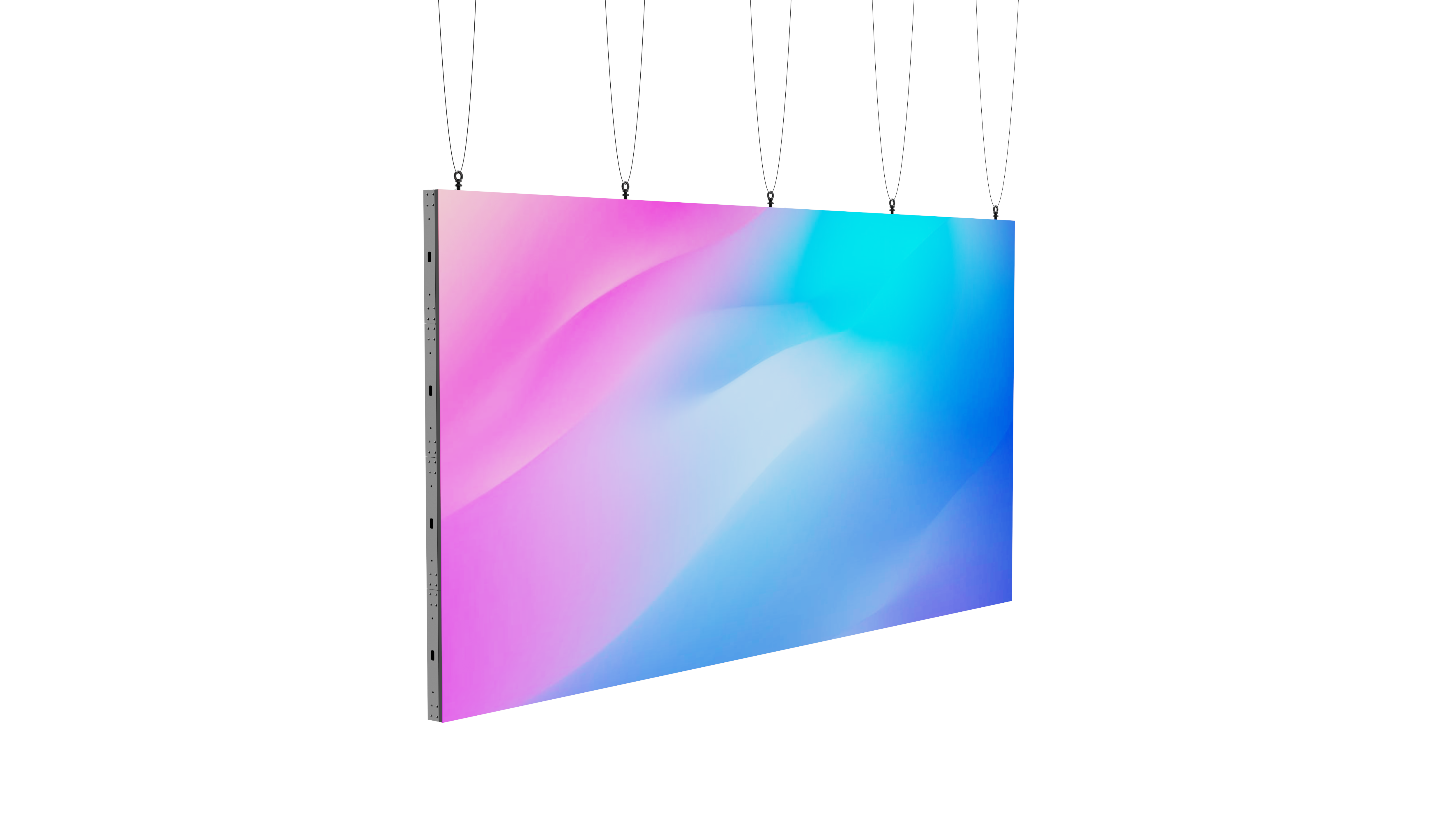
1600 × 900 mm, 36,864 pixels, rubber-masked edge.
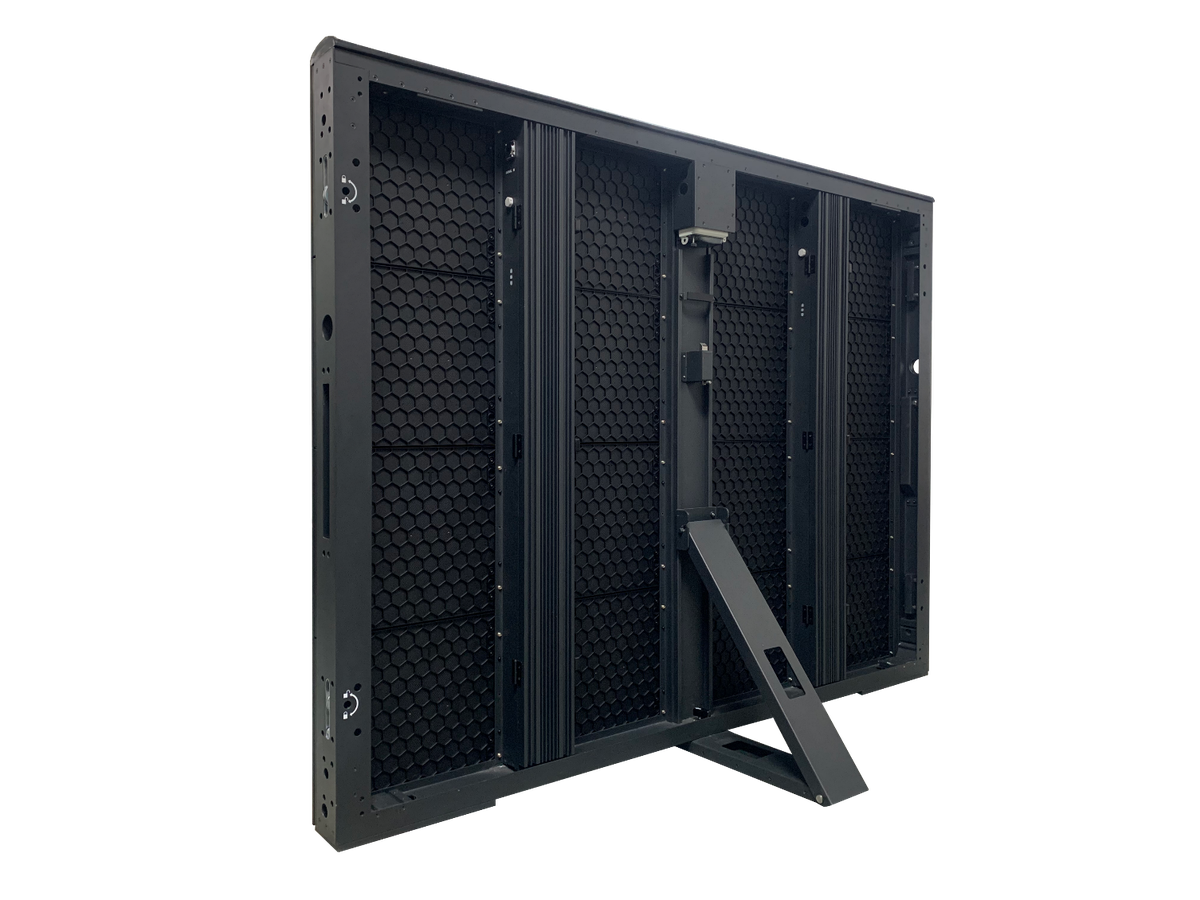
Rear
Folding bracket, retract lock, hook locks, finned cabinet.
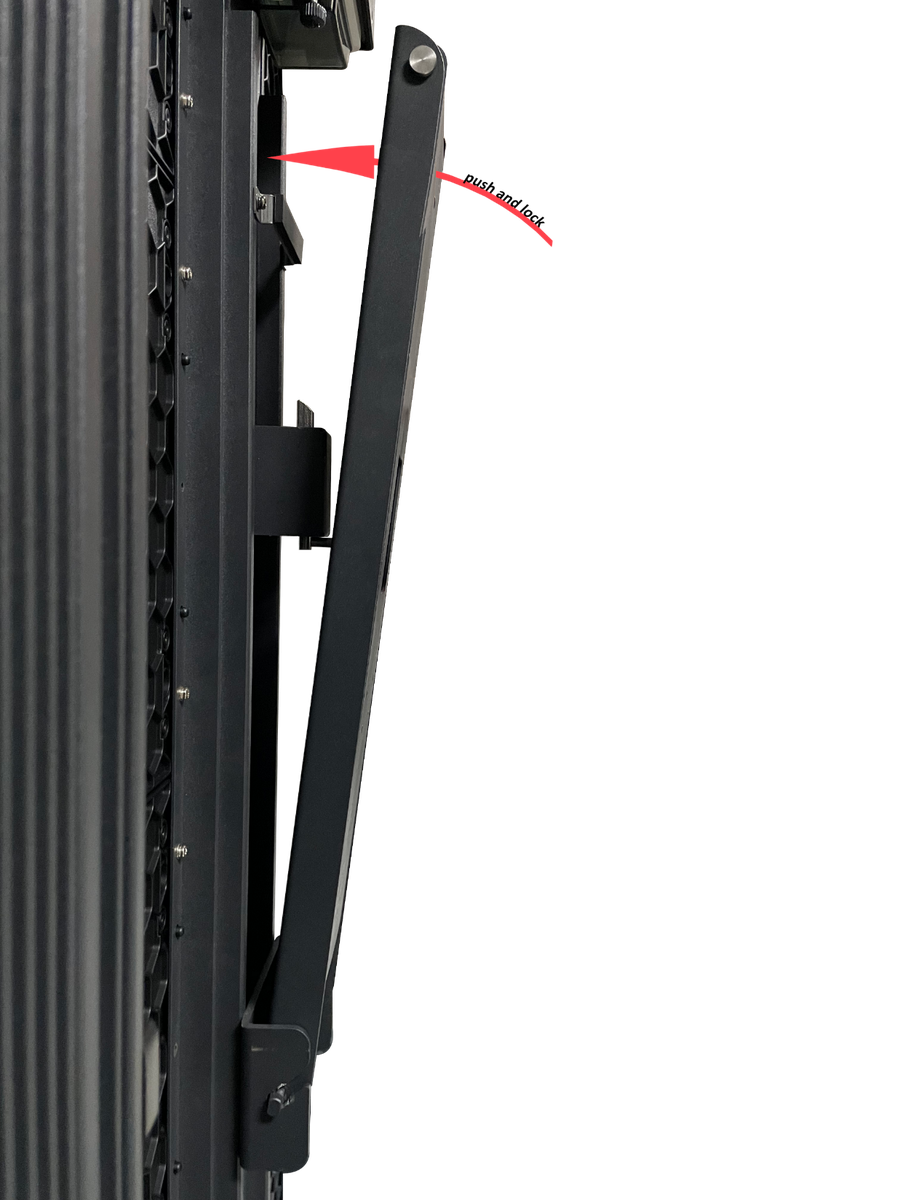
Edge profile
Aluminium profile, bottom protection plates, side handle.
ES10, ES6 and the 1200 mm cabinet option
All variants share the cabinet depth, bracket, locks and transport cart. A tender can specify one pitch now and add the other later without changing the structure.
ES10
10 mmLong runs viewed from the stands and from main camera positions.
- 10,000 dots/m²
- SMD 3535
- 36,864 dots per panel
- Scan grade 2 s
ES6
6.25 mmGrounds where front rows or pitch-side cameras sit close to the board.
- 25,600 dots/m²
- SMD 2727
- 36,864 dots per panel
- Scan grade 5 s
1600 × 1200 mm
1,200 mmTaller cabinet for sites that need more image height over the same run length.
- Same bracket and locks
- Same 4 fast locks per side
- Common spare parts
- Mixed with 900 mm cabinets
ES10 and ES6 technical specifications
Both part numbers use the 1600 × 900 mm cabinet. ES10 is 10 mm pitch for long runs seen from the stands and distant cameras; ES6 is 6.25 mm for front rows and pitch-side cameras.
| Parameter | ES10 | ES6 |
|---|---|---|
| Optical | ||
| Pixel pitch | 10 mm | 6.25 mm |
| LED configuration | SMD 3535 | SMD 2727 |
| Pixel density | 10,000 dots/m² | 25,600 dots/m² |
| Brightness | 6,000 cd/m² | 6,000 cd/m² |
| Mechanical | ||
| Cabinet size | 1600 × 900 mm | 1600 × 900 mm |
| Cabinet resolution | 36,864 dots | 36,864 dots |
| Cabinet weight | 50 kg | 50 kg |
| Bracket angle | 90° | 90° |
| Locks per side | 4 fast locks | 4 fast locks |
| Electrical and control | ||
| Refresh rate | 7,680 Hz | 7,680 Hz |
| Scan grade | 2 s | 5 s |
| Maximum power consumption | 1,100 W/panel | 1,100 W/panel |
| Average power consumption | 380 W/panel | 380 W/panel |
- Cabinet options
- 1600 × 900 mm as standard; 1600 × 1200 mm available.
- Bracket angle
- 90°, fixed stop, standard for perimeter work.
- Corners and returns
- Straight runs and corner returns use the same cabinet, linked with 4 fast locks per side.
- System reference
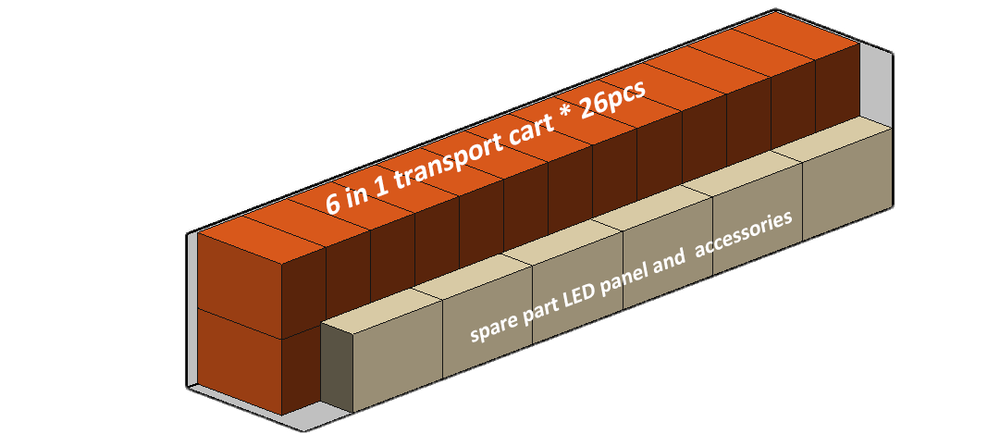
- 156 panels of 1600 × 900 mm for a 250 m perimeter, packed in 26 transport carts.
In service: stadium perimeter LED boards at a football ground
The same cabinet is installed, played against and stored between fixtures. Load-in and storage are where perimeter hardware takes most of its damage, so handles, locks and carts are specified for both.
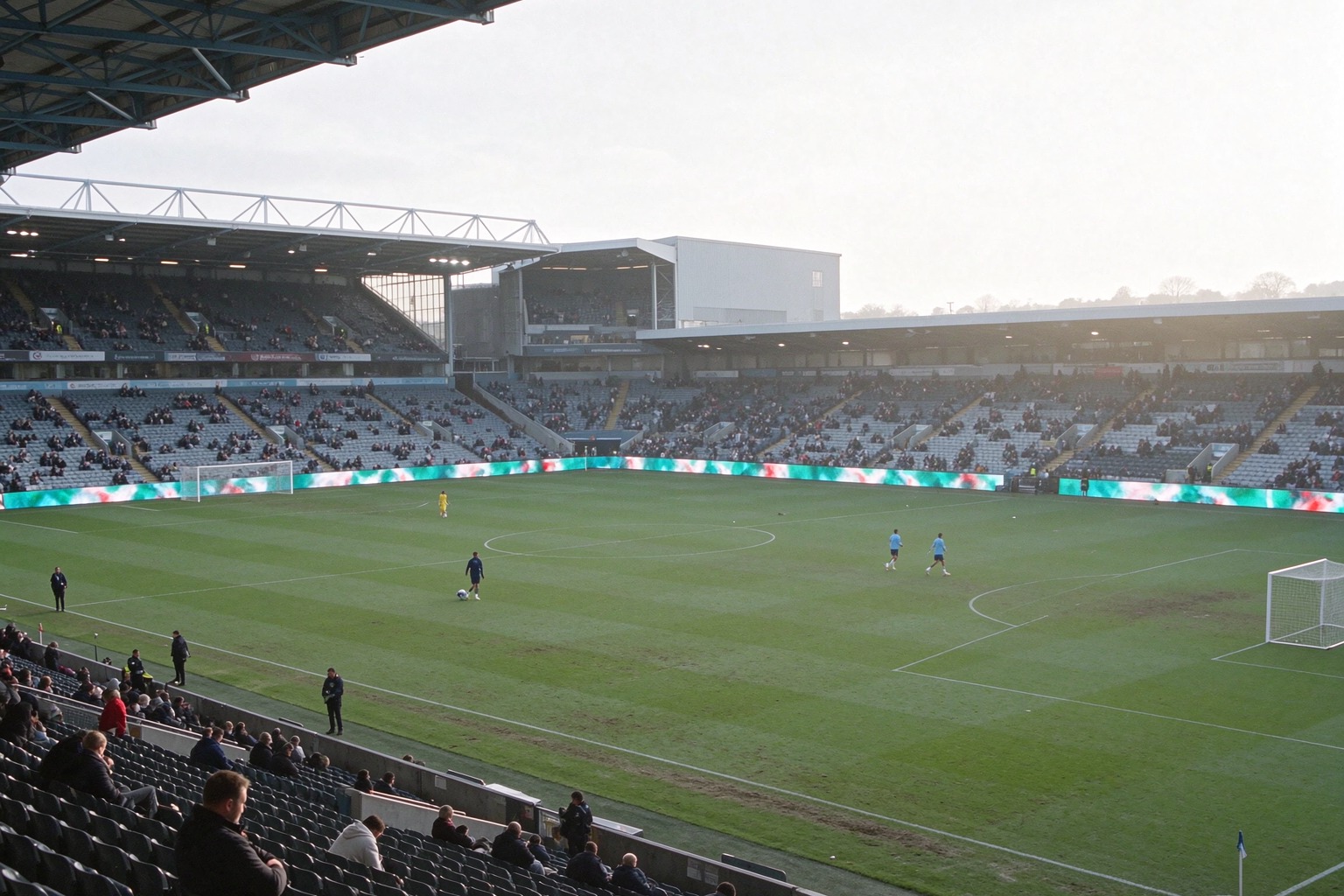
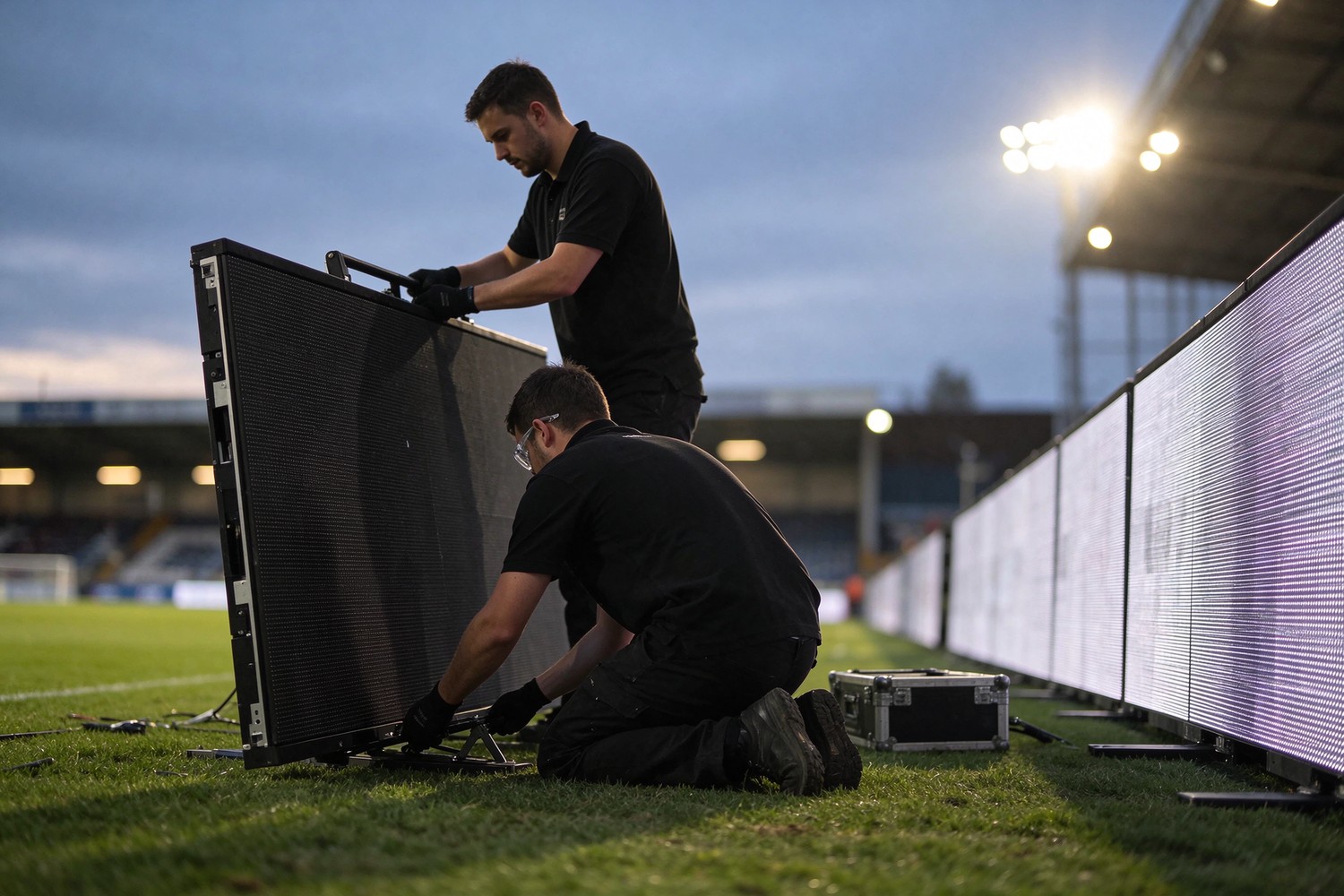
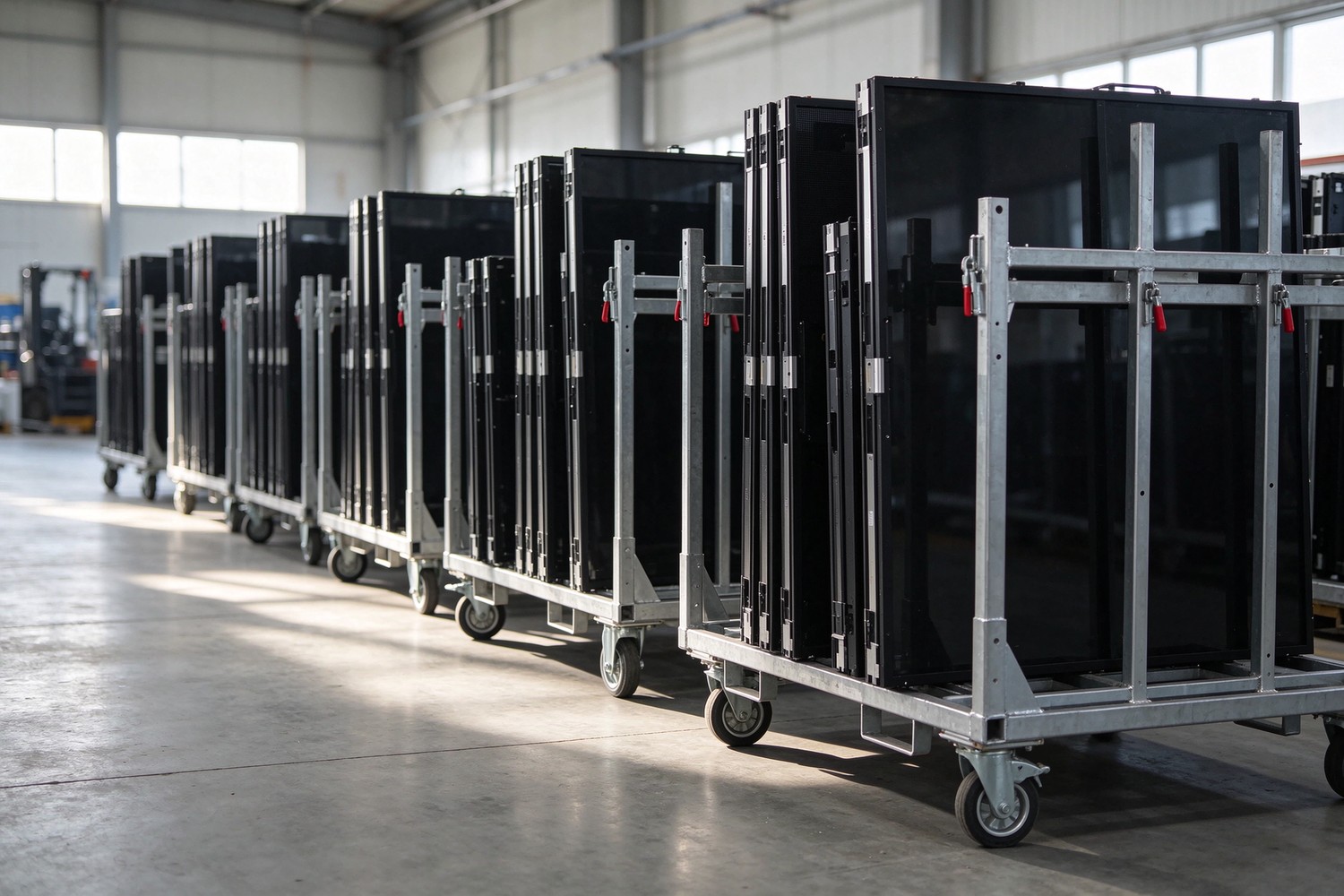
A 250 m perimeter loads into one 40 ft container
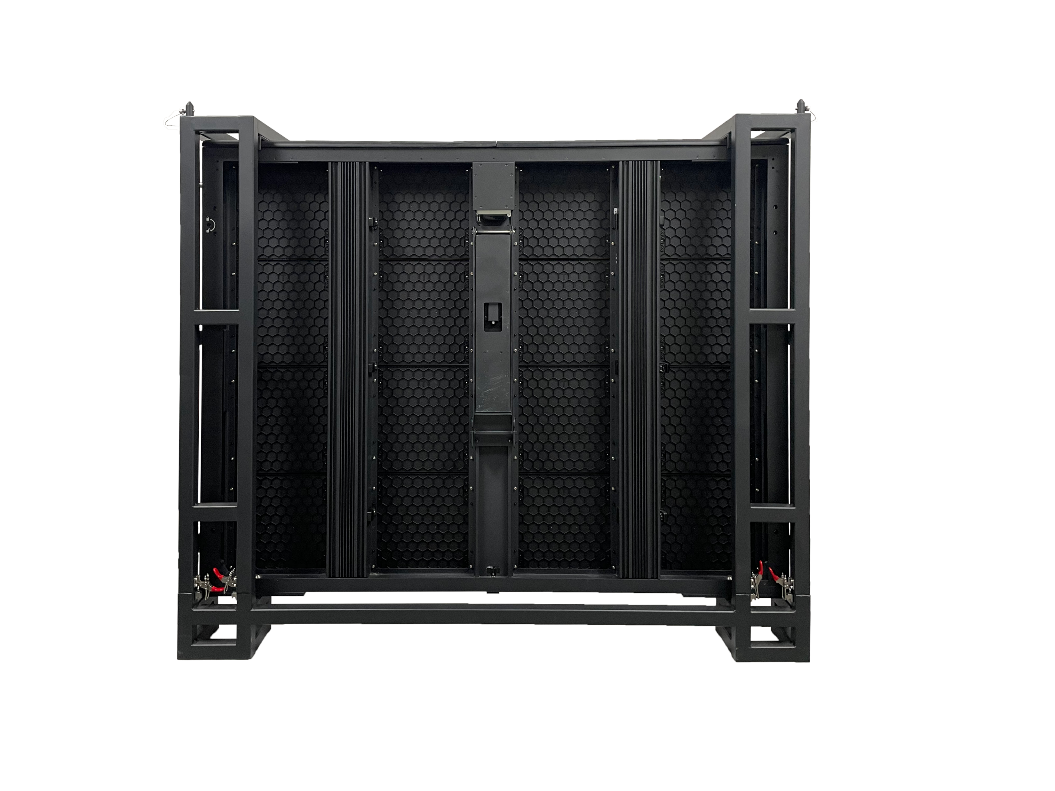
Panel and cart were sized together, so a 250 m perimeter travels in one 40 ft container. On site the same carts become the handling equipment.
- Complete perimeter system
- 250 m
- Container loading
- 40 ft
- Panels of 1600 × 900 mm
- 156
- Six-in-one carts, 3 mm SUS304
- 26
Spare panels and accessories travel separately in flight cases, so carts stay packed and spares stay reachable without unpacking a container. Carts roll on castors and carry 4 fast locks per side; the side structures come off when a cart has to leave the run.
Machining and assembly in-house
Perimeter boards are viewed at a shallow angle, where misalignment between cabinets shows up first. Cabinets and brackets are CNC machined, so panels align along the run and the face stays flat across joints.

- 01CNC machining on cabinet and bracket, so 1600 × 900 mm panels align along the whole run.
- 02Aluminium profile cabinets: lighter than conventional steel cabinets and move heat to the fins more effectively.
- 03SUS304 for brackets and the 3 mm cart frame, specified for wet outdoor use and repeated handling.
- 04CE and RoHS documentation held on file for European tenders; FCC documentation for US projects.
CE, RoHS and warranty documentation
CE and RoHS
CE and RoHS declarations and test reports are held on file for procurement and tender submission in the EU, with FCC documentation for US projects.
Five-year warranty
Cabinet, bracket and module supply carry a five-year warranty. Spare panels travel in flight cases rather than waiting on the next container.
OEM and private label
Panels ship under a distributor's own brand with agreed cartons, labels and packing lists, for sign companies reselling perimeter systems.
Stadium perimeter LED display: common questions
What pixel pitch is used for a stadium perimeter LED display?−
ES10 runs at 10 mm pitch with 10,000 dots/m² and ES6 at 6.25 mm with 25,600 dots/m². ES10 suits long runs read from the stands and from main camera positions; ES6 suits front rows and pitch-side cameras. Both use the same 1600 × 900 mm cabinet, so the two can be mixed on one site.
How many panels make a 250 m perimeter?+
A 250 m perimeter is 156 panels of 1600 × 900 mm, carried in 26 six-in-one carts built from 3 mm SUS304. Spare panels and accessories travel separately in flight cases. The complete system loads into one 40 ft container.
Can this perimeter display be used on broadcast?+
Both part numbers run 7,680 Hz refresh at 6,000 cd/m². That refresh keeps a rotating sponsor image clean in a camera pan and avoids banding against 50 Hz and 60 Hz shutters. Brightness can be set lower for evening fixtures under floodlight.
What protects the panels from ball impact?+
A moulded top protection cap and a soft rubber mask cover the frame and face edges, so impact lands on plastic and rubber rather than on the modules. Panels link with M10 hook locks and 4 fast locks per side, which keeps the run aligned after contact.
How heavy is one panel, and what does it draw?+
Each 1600 × 900 mm cabinet weighs 50 kg and has a top bar handle and side handles, so two people handle it. Maximum power draw is 1,100 W per panel at full white; average consumption in service is 380 W per panel.
Do you supply CE documentation and OEM branding?+
CE and RoHS declarations and test reports are held on file for European tenders, with FCC documentation for US projects. Panels can ship under a distributor's own brand with agreed cartons, labels and packing lists. Warranty on cabinet, bracket and modules is five years.